
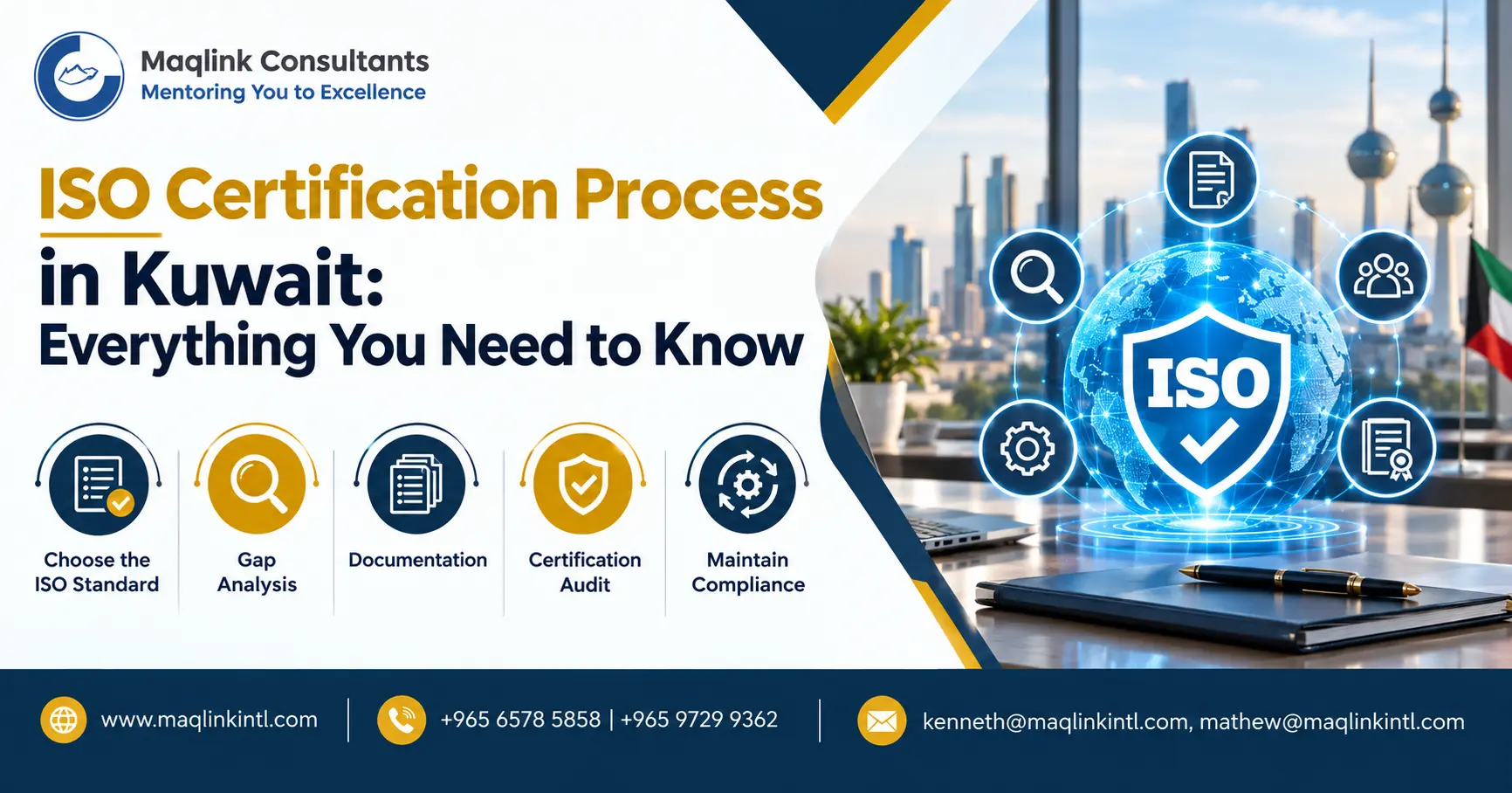
From the outside, getting an ISO certificate looks simple. You hire someone, they audit you, and a document arrives. In reality the process takes months, involves several parties, and has a few points where companies lose time or money. This guide walks through the steps in the order they happen, so you know what to expect before you start. It applies to the common management system standards such as ISO 9001, ISO 14001 and ISO 45001, which all follow the same basic path.
What ISO certification actually means
ISO writes the standards but does not issue certificates. Certificates come from independent certification bodies, and the reliable ones are accredited. Accreditation means a separate authority has checked that the certification body runs its audits according to international requirements. An accredited certificate carries the accreditation mark, and clients and tender evaluators in other countries recognise it. A certificate from an unaccredited body can look identical on paper but may be rejected when a customer checks it. Before you sign anything, ask the certification body for proof of its accreditation for your standard and your industry.
Step 1: Choose the standard and set the scope
Start with the reason you want certification. A customer or tender that asks for quality points to ISO 9001. Pressure from regulators or clients on waste and emissions points to ISO 14001. Workplace safety points to ISO 45001, and data protection to ISO 27001. Many companies end up with two or three standards over time.
Then define the scope: which sites, activities, products and services the certificate will cover. A scope that is too narrow may not satisfy your client. One that is too wide adds audit days and cost. Also check which edition applies. ISO 9001:2026 was published on 16 September 2026 and ISO 14001:2026 has also been released, with transition periods running to 2029. Ask any certification body which edition it will audit you against today and when it expects to be accredited for the new ones.
Step 2: Run a gap analysis
A gap analysis compares what your company does now against each requirement of the standard. Most businesses are closer than they expect. They already inspect work, keep records and deal with complaints. The gaps usually appear in the same places: a documented assessment of risks, measurable objectives, supplier evaluation, internal audits and management review. The result should be a short action list with an owner and a deadline beside every item.
Step 3: Build the system and train your people
Now you close the gaps. This means writing the policy and objectives, documenting the procedures that genuinely need documenting, and, more importantly, running the processes the way they are written. Auditors do not certify paperwork. They look for evidence that the system works, and that evidence takes time to build. Expect a few months of real records before the audit.
People matter more than documents at this stage. Short awareness sessions help every employee understand the policy and their own role. For the staff who will run the system, formal ISO management system training in Kuwait, covering topics such as internal auditing and the interpretation of clauses, makes the later steps far smoother.
Step 4: Hold an internal audit and a management review
Both are requirements of the standards, and the certification body will ask to see them. An internal audit checks your own system before an outsider does. The auditor should be competent and should not audit their own work. Every finding needs a corrective action, and the fix should address the cause, not just the symptom. After that, top management meets to review results, complaints, audit outcomes and resources. Keep minutes. A management review where only the quality manager attends will draw questions from the external auditor.
Step 5: Select a certification body and apply
Request quotes from more than one accredited body. The application form records your scope, sites, number of employees and processes, and the audit duration is calculated from that information. It is not a figure the auditor picks freely. When comparing offers, look at accreditation, experience in your sector, auditor availability and the fees for later surveillance audits, not only the first quote. Fees for each stage are usually billed separately and depend on company size and audit time.
Step 6: Stage 1 audit
Stage 1 is a readiness review, mostly of documents. The auditor checks that your scope, policy, objectives and key records exist and that you understand the requirements. It does not result in a certificate. Any serious concern raised here should be fixed before Stage 2, otherwise the main audit may be postponed.
Step 7: Stage 2 audit
Stage 2 is the formal certification assessment, normally carried out at your premises. The audit team interviews staff, observes processes and samples records to confirm the system is implemented and effective. Findings are usually graded. Minor nonconformities need a corrective action plan, while major ones typically have to be closed before certification can go ahead. Once the findings are dealt with, the certification body reviews the audit file and makes the decision. The audit team only recommends. The certificate is issued after that decision, normally valid for three years.
Step 8: Surveillance and recertification
The certificate is not the end. During the three-year cycle, the certification body returns for surveillance audits, usually every year and sometimes twice a year, to confirm the system is still working. Before the certificate expires, a recertification audit takes place. Companies that treat the system as a project and drop it after certification tend to struggle at these visits.
How long does it take, and what does it cost?
There is no single answer. A small company with decent records can be ready in a few months. A multi-site operation with several standards will take longer. Costs can arise from multiple sources including consultancy, training, certification audit fees, and internal personnel time. Organizations should also consider the costs of any infrastructure, facilities, equipment, technology, third-party assessments, inspections, testing, calibration, and other resources that may be required to establish, implement, and maintain the intended management system. Be careful with any quote that gives one fixed price without asking about your size, sites and processes, because accredited audit time is calculated from exactly those details.
Do you need a consultant?
No law requires one, and some companies manage on their own. Many choose to hire ISO consultants in Kuwait because it shortens the gap analysis and helps avoid the mistakes that cost an extra audit visit. A good consultant asks to see how you actually work, explains the clauses in plain terms, trains your staff and leaves you able to run the system alone. Be cautious of anyone who promises a certificate in a fixed number of days, supplies a ready-made manual with your logo added, or suggests that an audit can be skipped. Certificates obtained that way tend to fail the first time a client asks questions.
Mistakes that slow companies down
The same problems appear again and again. Companies copy templates that do not match their operations. Top management signs the policy but stays away from the process. Records are created in a rush a week before the audit, and auditors notice. The scope is chosen without checking what the client or tender really requires. And after the certificate arrives, nobody owns the system. Each of these is avoidable with an early gap analysis, trained internal auditors and a named person responsible for the system.
Where to go from here
The process is easier when you break it into steps and check your readiness at each one. Maqlink International supports organisations through this journey, from gap analysis and implementation to staff training and audit preparation. If you are weighing up ISO certification in Kuwait for your own company, start by deciding which standard your customers or regulators actually care about, then compare your current practice against it. That single exercise will tell you how far you have to go.