
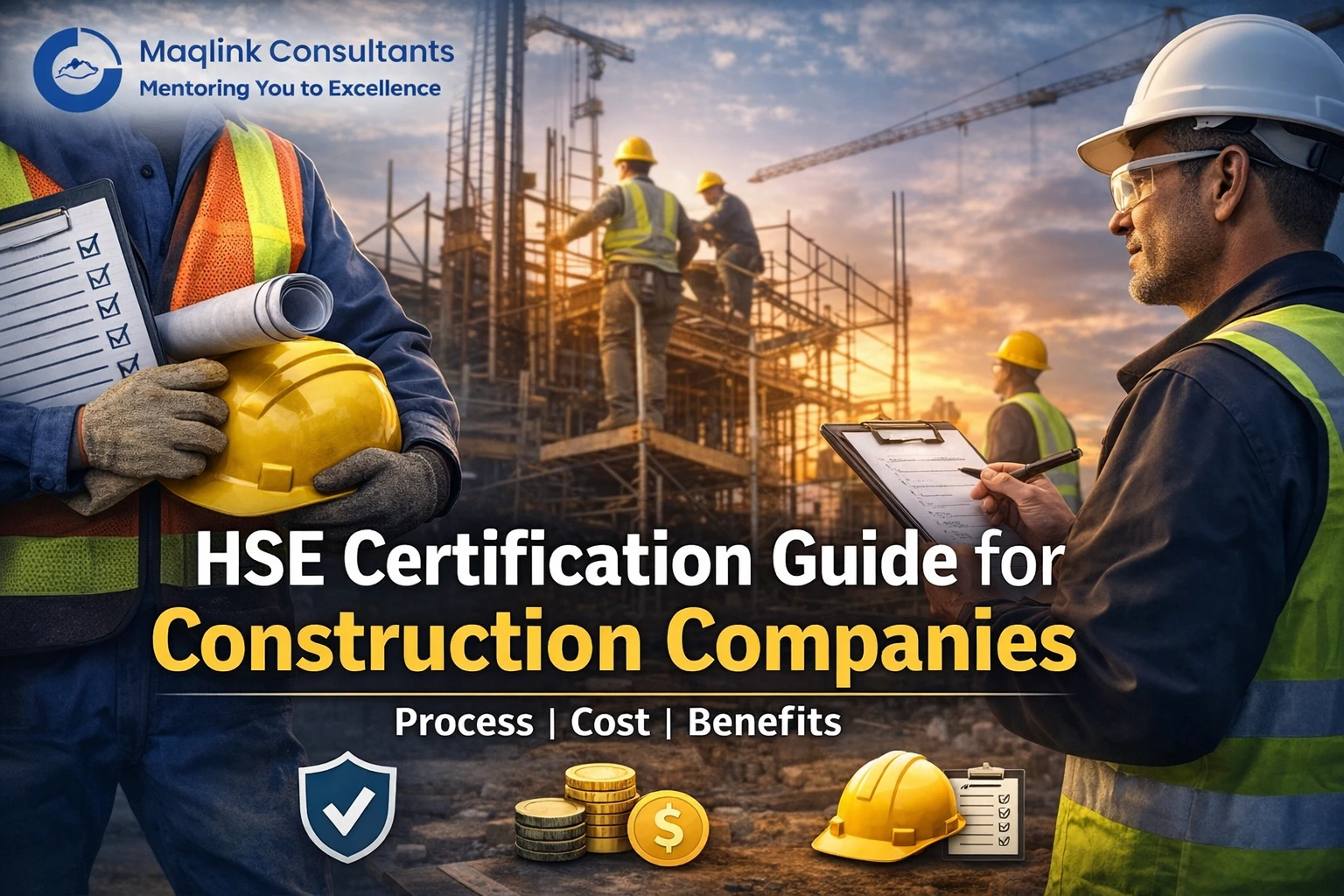
The construction industry is one of the most high-risk sectors worldwide, involving hazards such as falls, heavy machinery accidents, and environmental risks. To manage these challenges effectively, companies must adopt a structured approach to safety and compliance.
HSE (Health, Safety, and Environment) certification provides a systematic framework that helps construction companies improve workplace safety, reduce risks, and enhance operational efficiency.
What is HSE Certification?
HSE certification is a management system that ensures organizations control workplace hazards, protect employee health, and minimize environmental impact through standardized processes.
It is commonly aligned with:
- ISO 45001 → Focuses on workplace safety management
- ISO 14001 → Focuses on environmental responsibility
Why HSE Certification is Important for Construction Companies
- Improved Worker Safety →Reduces accidents, injuries, and fatalities through structured safety measures.
- Regulatory Compliance→Helps companies meet local and international safety regulations.
- Better Project Opportunities→Many clients prefer or require certified contractors for projects.
- Cost Savings→Fewer accidents lead to reduced insurance claims and downtime.
- Enhanced Company Reputation→Demonstrates commitment to safety and quality standards.
Key HSE Standards for Construction
- ISO 45001 (Occupational Health & Safety)→Provides a framework for identifying risks and preventing workplace injuries.
- ISO 14001 (Environmental Management)→Helps manage environmental impact and ensure sustainability.
- Local Safety Regulations→Companies must also comply with country-specific safety laws and guidelines.
Core Components of an HSE Management System
- Safety Policy→Defines the organization’s commitment to health, safety, and environment.
- Hazard Identification & Risk Assessment→Identifies potential risks and evaluates their impact.
- Standard Operating Procedures (SOPs)→Provides clear instructions for safe work practices.
- Training & Awareness→Ensures employees understand safety protocols and responsibilities.
- Incident Reporting System→Tracks accidents and helps prevent recurrence.
- Emergency Preparedness→Prepares teams for fire, accidents, or natural disasters.
- Monitoring & Continuous Improvement→Regular audits ensure ongoing compliance and performance improvement.
Step-by-Step Process to Get HSE Certification
- Gap Analysis→Assess current safety practices and identify areas for improvement.
- Documentation Development→Create policies, procedures, and compliance records.
- System Implementation→Apply safety systems across all operations and sites.
- Employee Training→Train workers on safety procedures and emergency response.
- Internal Audit→Evaluate system effectiveness before certification.
- External Audit→Certification body verifies compliance with standards.
- Certification Approval→Organization receives official certification upon successful audit.
Common Construction Risks Addressed by HSE
- Falls from Height→Requires proper scaffolding, harnesses, and fall protection systems.
- Machinery Hazards→Includes risks from cranes, forklifts, and heavy equipment.
- Electrical Risks→Exposure to faulty wiring and high-voltage systems.
- Chemical Exposure→Handling hazardous materials such as solvents and dust.
- Environmental Conditions→Heat, noise, and weather conditions affecting worker safety.
Modern HSE Trends (2026)
- AI-Based Risk Prediction→Uses data analytics to identify potential hazards before incidents occur.
- Smart PPE (Personal Protective Equipment)→Wearable devices monitor worker safety in real time.
- Digital Safety Management Systems→Software tools streamline audits, reporting, and compliance tracking.
- Real-Time Monitoring→Enables instant tracking of safety performance on job sites.
Cost of HSE Certification
- Small Companies→Lower cost due to simpler operations and fewer employees.
- Medium Companies→Moderate cost with increased documentation and training needs.
- Large Companies→Higher cost due to complex operations and multiple sites.
👉 Overall cost depends on company size, scope, and certification requirements.
Timeline for HSE Certification
- Small Organizations (2–4 Months)→Faster implementation due to fewer processes.
- Medium Organizations (3–6 Months)→Requires structured systems and training.
- Large Organizations (6–12 Months)→Complex operations take longer to standardize.
Common Mistakes to Avoid
- Lack of Employee Training→Without proper training, safety systems fail in practice.
- Poor Documentation→Missing or incorrect records can lead to audit failure.
- No Management Involvement→Leadership support is essential for successful implementation.
- Ignoring Continuous Improvement→HSE is an ongoing process, not a one-time effort.
How to Choose the Right HSE Consultant
- Industry Expertise→Choose consultants experienced in construction safety.
- Knowledge of Standards→Must understand ISO standards and safety regulations.
- Comprehensive Support→Should offer training, documentation, and audit assistance.
- Proven Experience→Look for successful project completion and client satisfaction.
Benefits of Hiring an HSE Consultant
- Faster Implementation→Experts streamline the certification process.
- Improved Compliance→Reduces the risk of legal and safety issues.
- Better Documentation→Ensures audit readiness and success.
- Ongoing Guidance→Supports continuous improvement and system maintenance.
ROI of HSE Certification
- Reduced Workplace Incidents→Safer environments lower accident rates significantly.
- Increased Productivity→Employees work more efficiently in safe conditions.
- More Business Opportunities→Certification improves eligibility for large projects.
- Long-Term Cost Savings→Reduces insurance costs and operational losses.
Conclusion
HSE certification is a vital investment for construction companies aiming to improve safety, ensure compliance, and achieve sustainable growth. By implementing a structured HSE system, organizations can protect their workforce, enhance efficiency, and build a strong industry reputation.
FAQs
1.What is HSE certification?
It is a system that ensures workplace safety, employee health, and environmental protection.
2.Is HSE certification mandatory?
It depends on local regulations, but safety compliance is always required.
3.How much does it cost?
Costs vary based on company size and complexity.
4.How long does it take?
Typically between 2 to 12 months.
5.Can small companies get certified?
Yes, companies of all sizes can implement HSE systems.
6.What is the main benefit?
Improved safety, compliance, and business growth.