
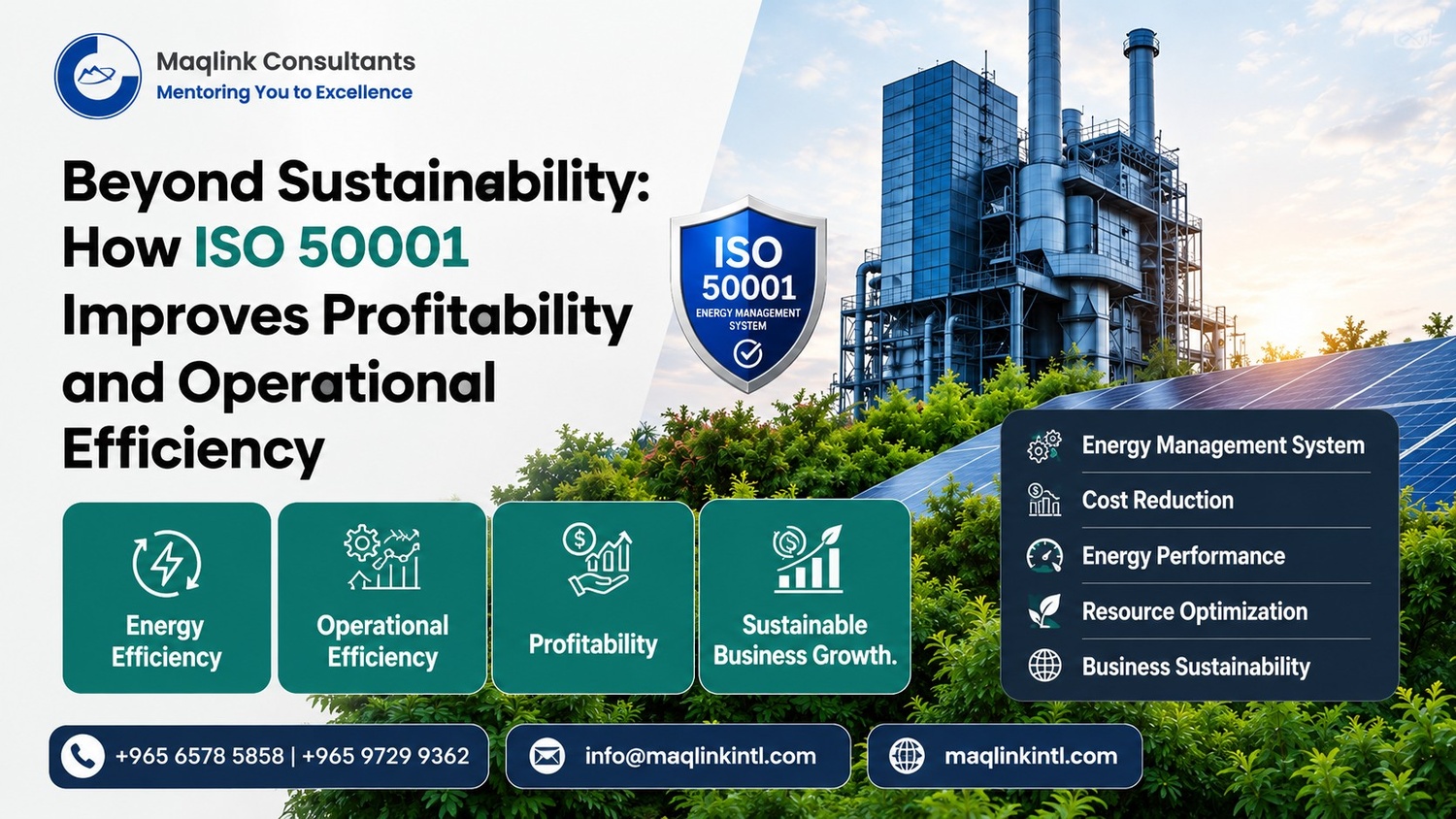
In today's competitive business environment, organizations are constantly looking for ways to improve profitability, reduce operational costs, and strengthen long-term sustainability. While many businesses focus on increasing revenue or expanding into new markets, one area with significant potential often receives less attention than it deserves: energy management.
Energy is essential to nearly every aspect of business operations. Manufacturing facilities depend on it to power equipment. Offices rely on it for lighting, air conditioning, and technology systems. Logistics operations require fuel and energy to move goods efficiently. Yet despite its importance, energy is often treated as a fixed expense rather than a resource that can be managed strategically.
Organizations that actively manage energy performance often discover opportunities to improve operational efficiency, reduce costs, and support sustainable business growth. This is where ISO 50001 can provide significant value.
Why Energy Management Matters More Than Ever
Over the past decade, businesses have faced increasing pressure to improve efficiency while managing rising operational costs. Energy prices continue to fluctuate, environmental expectations are growing, and stakeholders are paying closer attention to how organizations use resources.
As a result, energy management has evolved from an operational concern into a strategic business priority.
Many organizations are surprised to discover how much energy waste exists within their operations. Equipment may continue running when not required. Inefficient systems may consume more energy than necessary. Processes may be poorly optimized, resulting in unnecessary resource consumption.
These inefficiencies often go unnoticed because they become part of normal operations. However, over time they can significantly affect profitability.
Businesses that understand how energy is used and where improvements can be made are often better positioned to reduce costs and improve performance.
The Connection Between Energy Efficiency and Profitability
When discussing profitability, most organizations immediately think about sales growth. While increasing revenue is important, improving efficiency can often have an equally significant impact on financial performance.
Every unit of energy that is wasted represents money that could have been invested elsewhere.
Reducing energy consumption lowers operating costs without compromising product quality or service delivery. This creates direct financial benefits that improve profit margins and strengthen overall business performance.
For example, energy-efficient equipment typically requires less maintenance and operates more reliably. Improved energy performance can also reduce production costs, improve resource utilization, and enhance operational stability.
Small improvements made consistently across an organization can generate substantial savings over time.
This is why leading organizations increasingly view energy efficiency as a business opportunity rather than simply a sustainability initiative.
Understanding ISO 50001
ISO 50001 is the internationally recognized standard for Energy Management Systems (EnMS).
The standard provides organizations with a structured framework for managing energy performance and driving continual improvement.
Unlike one-time energy-saving projects, ISO 50001 focuses on creating a systematic approach to energy management.
The framework helps organizations:
- Understand how energy is used
- Identify opportunities for improvement
- Establish energy performance objectives
- Monitor and measure results
- Improve energy efficiency continuously
The goal is not simply to reduce energy consumption. The objective is to optimize energy performance while supporting operational and business goals.
Moving Beyond Isolated Energy Initiatives
Many organizations attempt to improve energy efficiency through isolated actions such as upgrading equipment or changing lighting systems.
While these initiatives can be beneficial, they often fail to deliver long-term results because they are not part of a broader strategy.
ISO 50001 takes a different approach.
The standard encourages organizations to integrate energy management into daily operations, decision-making processes, and business planning.
Instead of treating energy efficiency as a standalone project, businesses create systems that continuously identify opportunities for improvement.
This structured approach helps organizations achieve sustainable results rather than temporary gains.
Improving Operational Efficiency
Operational efficiency is one of the most significant benefits associated with ISO 50001 implementation.
Organizations that understand their energy consumption patterns gain valuable insights into how their operations function.
In many cases, excessive energy usage highlights inefficiencies elsewhere in the business.
For example:
- Equipment may be operating inefficiently
- Maintenance programs may require improvement
- Production schedules may need optimization
- Resource allocation may be ineffective
- Operational controls may be inadequate
Addressing these issues often improves overall business performance while simultaneously reducing energy consumption.
As a result, ISO 50001 supports not only energy performance but also broader operational excellence initiatives.
Strengthening Organizational Awareness
Technology alone cannot drive energy improvement.
Employees play an essential role in energy performance.
One of the strengths of ISO 50001 is its emphasis on awareness and engagement. Employees at all levels are encouraged to understand how their actions influence energy consumption and operational efficiency.
When employees become more aware of energy management objectives, organizations often experience improvements in resource utilization, accountability, and continuous improvement efforts.
Creating a culture of energy awareness helps sustain improvements over the long term.
Supporting Sustainable Business Growth
Sustainable growth requires organizations to balance profitability, operational performance, and responsible resource management.
Businesses that waste resources often face higher costs, reduced efficiency, and greater vulnerability to changing market conditions.
Organizations that manage resources effectively are generally more resilient and better positioned for future growth.
ISO 50001 supports sustainable business growth by helping organizations:
- Reduce operational costs
- Improve energy performance
- Enhance resource optimization
- Strengthen environmental responsibility
- Increase operational resilience
- Support long-term business objectives
These benefits contribute to stronger financial performance while supporting broader sustainability goals.
Meeting Stakeholder Expectations
Customers, investors, regulators, and business partners are increasingly interested in how organizations manage resources and environmental impacts.
Businesses that demonstrate a commitment to responsible energy management often strengthen stakeholder confidence and improve their reputation.
While ISO 50001 is primarily an energy management standard, it also demonstrates that an organization takes efficiency, accountability, and continuous improvement seriously.
This can create advantages when pursuing contracts, partnerships, or growth opportunities where sustainability and operational excellence are important considerations.
A Long-Term Investment in Performance
One of the most valuable aspects of ISO 50001 is that it encourages long-term thinking.
Rather than focusing solely on short-term cost reductions, organizations develop capabilities that support continuous improvement.
The standard helps businesses establish processes that can adapt to changing energy costs, technological advancements, and operational requirements.
This creates a stronger foundation for future success.
Organizations that treat energy management as an ongoing business discipline often achieve better results than those relying on occasional improvement projects.
Conclusion
Energy management is no longer just about reducing utility bills. It has become an important component of operational efficiency, profitability, and sustainable business growth.
Organizations that understand and manage their energy performance effectively are often better positioned to reduce costs, optimize resources, improve operational performance, and strengthen resilience.
ISO 50001 provides a practical framework that helps businesses move beyond isolated energy-saving initiatives and establish a culture of continual improvement.
At Maqlink International Management Consultants, we support organizations through ISO 50001 implementation, awareness training, internal auditor training, consulting, and certification support. Our goal is to help businesses develop structured energy management systems that improve performance, reduce costs, and contribute to long-term success.
In an increasingly competitive business environment, organizations that manage energy strategically are not simply conserving resources. They are creating stronger, more efficient, and more sustainable businesses for the future.