
In today's food industry, customers expect more than great taste and attractive packaging. They expect every product they purchase to be safe, hygienic, and consistently high in quality. At the same time, food businesses face increasing pressure to comply with regulations, meet customer expectations, and maintain operational efficiency.
A single food safety incident can lead to product recalls, financial losses, regulatory action, and long-term damage to a company's reputation. This is why food safety can no longer be treated as an afterthought. It must be built into every stage of the food production process.
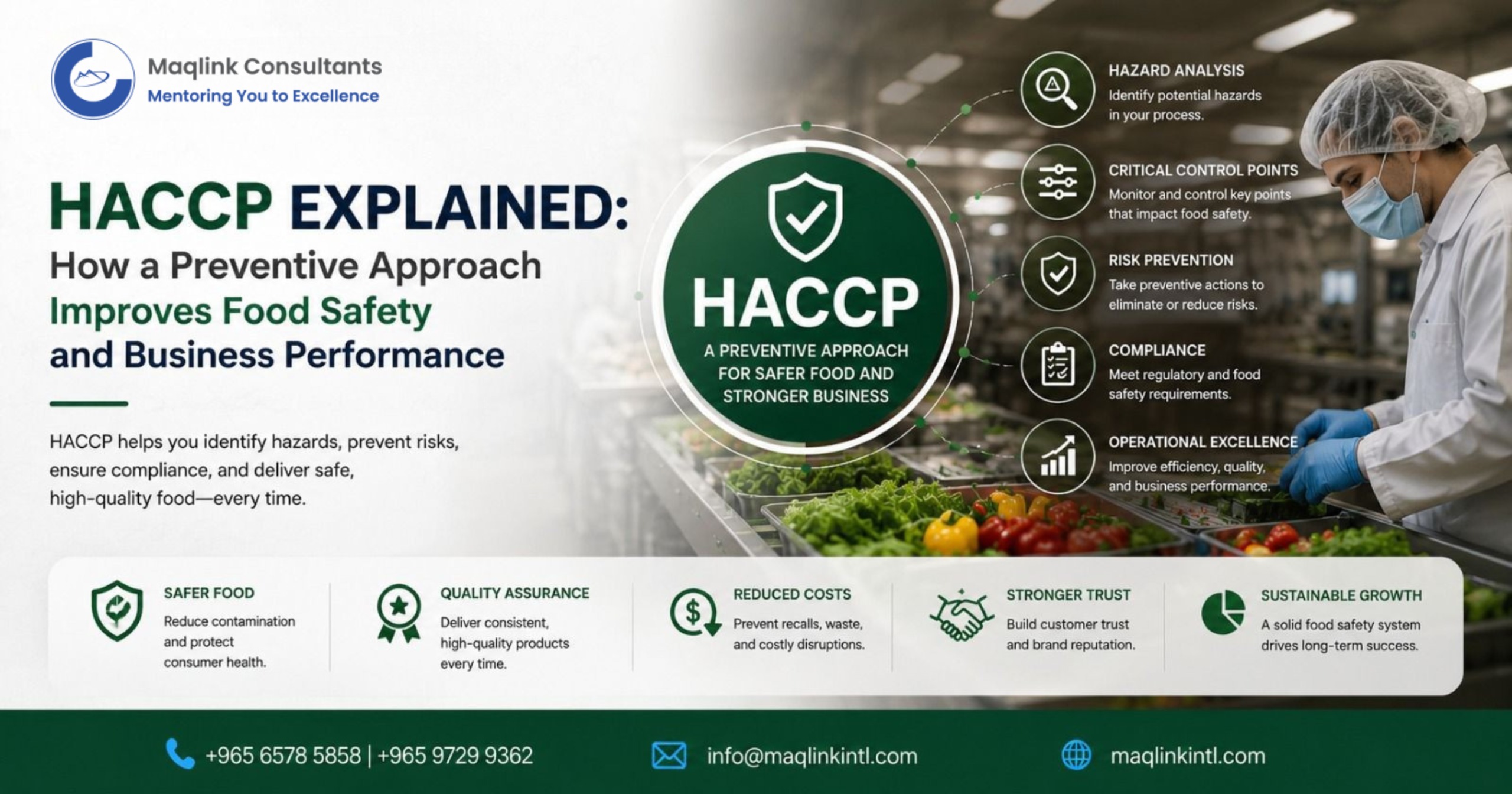
One of the most effective ways to achieve this is through HACCP (Hazard Analysis and Critical Control Points). Rather than waiting for problems to occur, HACCP takes a preventive approach by identifying and controlling food safety risks before they affect the final product.
This proactive system not only protects consumers but also helps businesses improve efficiency, strengthen compliance, and build lasting customer confidence.
Understanding HACCP
HACCP is an internationally recognized food safety management system designed to identify, evaluate, and control hazards that could compromise food safety.
Unlike traditional quality inspections that focus on detecting problems after production, HACCP focuses on preventing those problems before they occur.
The system examines every stage of the food production process—from receiving raw materials to processing, packaging, storage, transportation, and distribution—to identify where potential hazards may exist.
These hazards generally fall into three categories:
- Biological hazards such as bacteria, viruses, and parasites
- Chemical hazards including cleaning agents, pesticides, or allergens
- Physical hazards such as glass, metal fragments, or plastic contamination
By identifying these risks early, businesses can establish effective controls to prevent them from affecting consumers.
Why a Preventive Approach Matters
Many food safety issues are preventable.
Waiting until a product reaches the final inspection stage often means the damage has already been done. Contaminated products may need to be discarded, recalled, or withdrawn from the market, resulting in significant financial and reputational losses.
A preventive system like HACCP shifts the focus from reacting to problems to preventing them.
Instead of asking, "What went wrong?" businesses begin asking, "How can we stop it from happening?"
This change in mindset helps organizations reduce waste, improve consistency, and strengthen overall food safety performance.
The Seven Principles of HACCP
HACCP is built around seven internationally recognized principles that create a structured framework for food safety management.
1. Conduct a Hazard Analysis
Identify potential biological, chemical, and physical hazards that may occur during food production.
2. Determine Critical Control Points (CCPs)
Identify the stages in the process where controls are essential to eliminate or reduce hazards.
3. Establish Critical Limits
Set measurable limits such as temperature, time, or pH that must be maintained at each critical control point.
4. Monitor Critical Control Points
Regularly monitor processes to ensure critical limits are consistently met.
5. Establish Corrective Actions
Define the actions to take if monitoring shows that a critical limit has not been achieved.
6. Verify the System
Regularly review and verify that the HACCP system is working effectively through inspections, audits, and testing.
7. Maintain Documentation
Keep accurate records to demonstrate compliance and support continual improvement.
Together, these principles create a systematic approach that helps businesses manage food safety with confidence.
How HACCP Supports Business Performance
Many organizations view HACCP primarily as a compliance requirement. In reality, its benefits extend far beyond meeting regulatory expectations.
A well-implemented HACCP system contributes directly to operational efficiency and business growth.
Improved Product Quality
Consistent monitoring and process control reduce variations in production, resulting in safer, more reliable products.
Reduced Operational Costs
Preventing contamination is significantly less expensive than managing recalls, product waste, or customer complaints.
Increased Efficiency
Clearly defined procedures help employees work more consistently while reducing unnecessary delays and rework.
Better Regulatory Compliance
HACCP supports compliance with food safety regulations and demonstrates a proactive commitment to protecting consumers.
Stronger Brand Reputation
Customers are more likely to trust businesses that consistently deliver safe, high-quality products.
Building Customer Confidence
Customer trust is one of the most valuable assets any food business can have.
Today's consumers are more informed than ever. They expect transparency, quality, and responsible food safety practices.
Businesses with effective food safety systems demonstrate that customer wellbeing is a priority.
That confidence often translates into:
- Increased customer loyalty
- Positive word-of-mouth recommendations
- Stronger relationships with retailers
- Greater confidence from business partners
- Improved opportunities for market expansion
Food safety is no longer just about avoiding problems—it is about creating confidence.
HACCP Supports Operational Excellence
Operational excellence is achieved when processes are efficient, consistent, and continuously improving.
HACCP contributes to this by helping organizations standardize operations and reduce variability.
Employees understand their responsibilities more clearly.
Management gains better visibility into food safety risks.
Processes become easier to monitor and improve.
As a result, businesses often experience:
- Lower product rejection rates
- Improved resource utilization
- Better production planning
- Reduced downtime
- Enhanced productivity
The benefits extend beyond food safety and positively influence overall business performance.
Creating a Food Safety Culture
Technology and documented procedures alone cannot guarantee food safety.
People play the most important role.
Employees who understand why food safety matters are more likely to follow procedures, identify risks, and contribute to continuous improvement.
Creating a strong food safety culture involves:
- Regular employee training
- Clear communication
- Management commitment
- Accountability at every level
- Continuous learning and improvement
When everyone takes responsibility for food safety, the organization becomes stronger and more resilient.
HACCP and Long-Term Business Growth
Businesses that invest in food safety are investing in their future.
Strong food safety systems support sustainable growth by reducing operational risks, improving customer satisfaction, and strengthening compliance.
As food supply chains become increasingly global, many retailers, distributors, and international buyers expect suppliers to demonstrate structured food safety management.
HACCP helps organizations meet these expectations while creating opportunities for new partnerships and market expansion.
Rather than viewing HACCP as simply another requirement, successful businesses recognize it as a valuable investment that supports long-term competitiveness.
Conclusion
Food safety is not just about complying with regulations—it is about protecting customers, strengthening business performance, and building lasting trust.
HACCP provides a practical, preventive framework that helps organizations identify hazards, manage risks, and improve operational efficiency throughout the food production process.
Businesses that adopt HACCP are better positioned to reduce food safety risks, improve quality, strengthen compliance, and enhance customer confidence.
At Maqlink International Management Consultants, we help food businesses implement HACCP systems through expert consulting, awareness training, internal auditor training, and certification support. Our experienced team works closely with organizations to develop practical food safety management systems that not only meet regulatory requirements but also improve operational performance and support sustainable business growth.
In today's competitive food industry, businesses that prioritize prevention over reaction are the ones that earn customer trust, protect their reputation, and build a stronger foundation for future success.