
Introduction
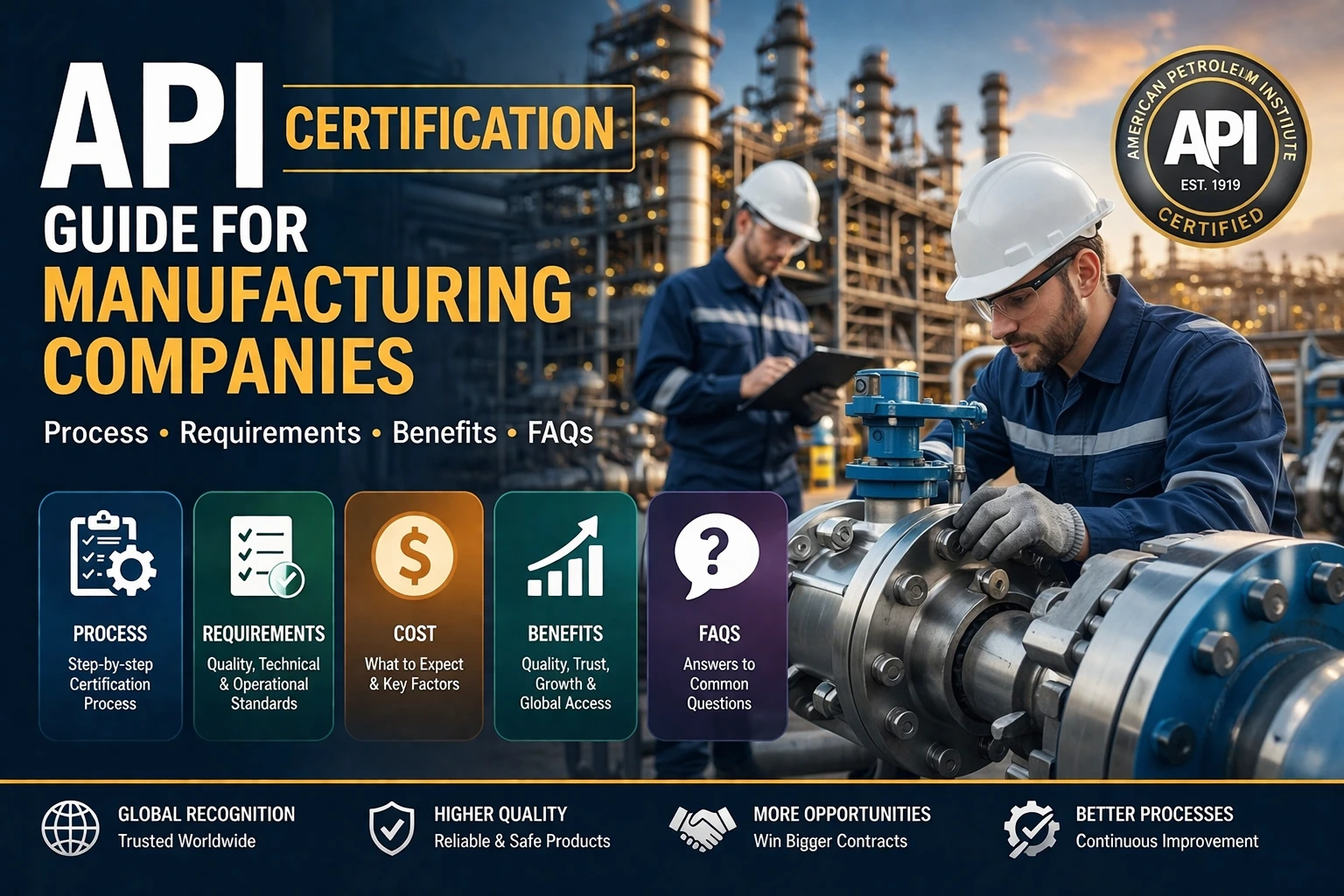
Manufacturing companies operating in high-demand industries like oil & gas, petrochemicals, and heavy engineering must follow strict quality and safety standards. One of the most recognized certifications in these sectors is API certification. It ensures that manufacturers meet globally accepted standards for equipment reliability, safety, and performance.
In a competitive global market, API certification is not just a compliance requirement but a strategic advantage. It helps businesses gain credibility, improve operational processes, and access high-value contracts. This guide answers the most important questions manufacturing companies have about API certification.
What is API Certification?
API certification refers to the standards and programs developed by the American Petroleum Institute for companies involved in manufacturing equipment used in the oil and gas industry.
These certifications ensure that products such as valves, pipelines, drilling equipment, and pressure vessels meet strict quality and safety benchmarks. API certification demonstrates that a company follows internationally recognized manufacturing standards.
For manufacturers, this certification is often essential to enter global supply chains and work with major oil and gas companies.
Why is API Certification Important for Manufacturing Companies?
API certification is important because it validates the quality and reliability of manufactured products in critical industries.
- Global Recognition:-API standards are accepted worldwide, helping companies expand into international markets.
- Customer Trust:-Certification assures clients that products meet strict safety and performance standards.
- Competitive Advantage:-Certified companies stand out when bidding for high-value industrial contracts.
- Regulatory Compliance:-Helps meet industry-specific legal and operational requirements.
- Operational Efficiency:-Improves internal processes and quality management systems.
What are the Main Types of API Certifications?
API offers various certifications depending on the manufacturing sector and product type.
- API Monogram Program:-Allows manufacturers to apply the API Monogram mark on certified products.
- API Q1 Certification:-Focuses on quality management systems for manufacturing organizations.
- API Q2 Certification:-Designed for service providers in the oil and gas industry.
- Product-Specific Certifications:-Covers equipment like pipelines, valves, drilling tools, and storage tanks.
Each certification has specific requirements and is chosen based on the company’s operations.
How Does the API Certification Process Work?
The API certification process involves several structured steps to ensure compliance.
- Application Submission:-The company submits details about its operations and products.
- Documentation Review:-API reviews quality manuals, procedures, and system controls.
- Gap Analysis:-Identifies areas where the company does not meet API standards.
- Implementation:-The company updates processes to align with requirements.
- Audit Inspection:-API auditors evaluate the manufacturing facility and systems.
- Certification Approval:-Certification is granted if all requirements are met.
This process ensures consistency and quality across all operations.
What are the Requirements for API Certification?
To achieve API certification, companies must meet several technical and operational requirements.
- Quality Management System:-Must align with API Q1 standards and include documented procedures.
- Skilled Workforce:-Employees must be trained and competent in manufacturing processes.
- Equipment and Infrastructure:-Facilities must meet technical specifications for production and testing.
- Traceability Systems;-Ability to track materials and products throughout the manufacturing cycle.
- Inspection and Testing;-Regular quality checks must be conducted and documented.
Meeting these requirements ensures high-quality output and compliance.
How Long Does API Certification Take?
The timeline for API certification depends on company size and readiness.
- Small Companies (3–6 Months);-Faster implementation due to simpler processes.
- Medium Companies (6–9 Months):-Requires structured documentation and training.
- Large Companies (9–12 Months):-Complex operations increase preparation time.
Proper planning and expert guidance can significantly reduce the timeline.
What is the Cost of API Certification?
The cost varies based on multiple factors.
- Company Size:-Larger organizations require more audits and documentation.
- Scope of Certification:-Product-specific certifications may increase costs.
- Consultancy Fees;-External experts may be required for implementation.
- Audit Charges:-API audit and inspection costs vary by scope.
👉 Estimated range: $10,000 to $50,000+
What are the Common Challenges in API Certification?
Manufacturers often face challenges during certification.
- Complex Documentation:-Preparing detailed manuals and procedures can be time-consuming.
- Lack of Expertise:- Limited knowledge of API standards can slow progress.
- Process Gaps:- Existing systems may not meet API requirements.
- Employee Resistance:-Adapting to new processes can be difficult for staff.
- Audit Pressure:- Companies must be fully prepared for strict inspections.
Overcoming these challenges requires proper planning and support.
How Does API Certification Benefit Manufacturing Companies?
API certification delivers long-term business advantages.
- Improved Product Quality:- Ensures consistency and reliability in manufacturing processes.
- Market Expansion:- Opens doors to international clients and projects.
- Higher Revenue Opportunities:- Certified companies can bid for premium contracts.
- Risk Reduction:- Minimizes defects, failures, and operational risks.
- Stronger Brand Reputation:- Positions the company as a trusted industry leader.
How to Choose the Right API Certification Consultant?
Selecting the right consultant can make the process easier.
- Industry Experience:- Choose experts with experience in manufacturing and oil & gas sectors.
- API Knowledge:- Must have deep understanding of API standards and audits.
- End-to-End Support:- Should assist with documentation, training, and audit preparation.
- Proven Track Record:- Look for successful certification projects and client testimonials.
Future Trends in API Certification
- Digital Quality Management Systems:- Automation improves documentation and compliance tracking.
- AI-Based Inspection:- Enhances accuracy in quality control processes.
- Smart Manufacturing:- Integration of IoT and automation in production systems.
- Sustainability Focus:-Increasing emphasis on environmental compliance.
Conclusion
API certification is a critical milestone for manufacturing companies aiming to operate in high-standard industries. It ensures compliance, improves product quality, and enhances market credibility.
While the certification process can be complex, the long-term benefits outweigh the challenges. Companies that invest in API certification position themselves for sustainable growth, global expansion, and increased profitability.
FAQs
1. What is API certification in manufacturing?
API certification ensures that manufacturing companies meet industry standards for quality, safety, and performance, especially in oil and gas sectors.
2. Is API certification mandatory?
It is not always mandatory, but it is often required by clients and contracts in the oil and gas industry.
3. How much does API certification cost?
Costs typically range from $10,000 to $50,000 depending on scope and company size.
4. How long does the certification process take?
It usually takes between 3 to 12 months based on company readiness.
5. What is the API Monogram Program?
It allows certified manufacturers to use the API mark on their products, indicating compliance with standards.
6. Can small manufacturers get API certification?
Yes, small companies can achieve certification with proper preparation and guidance.