
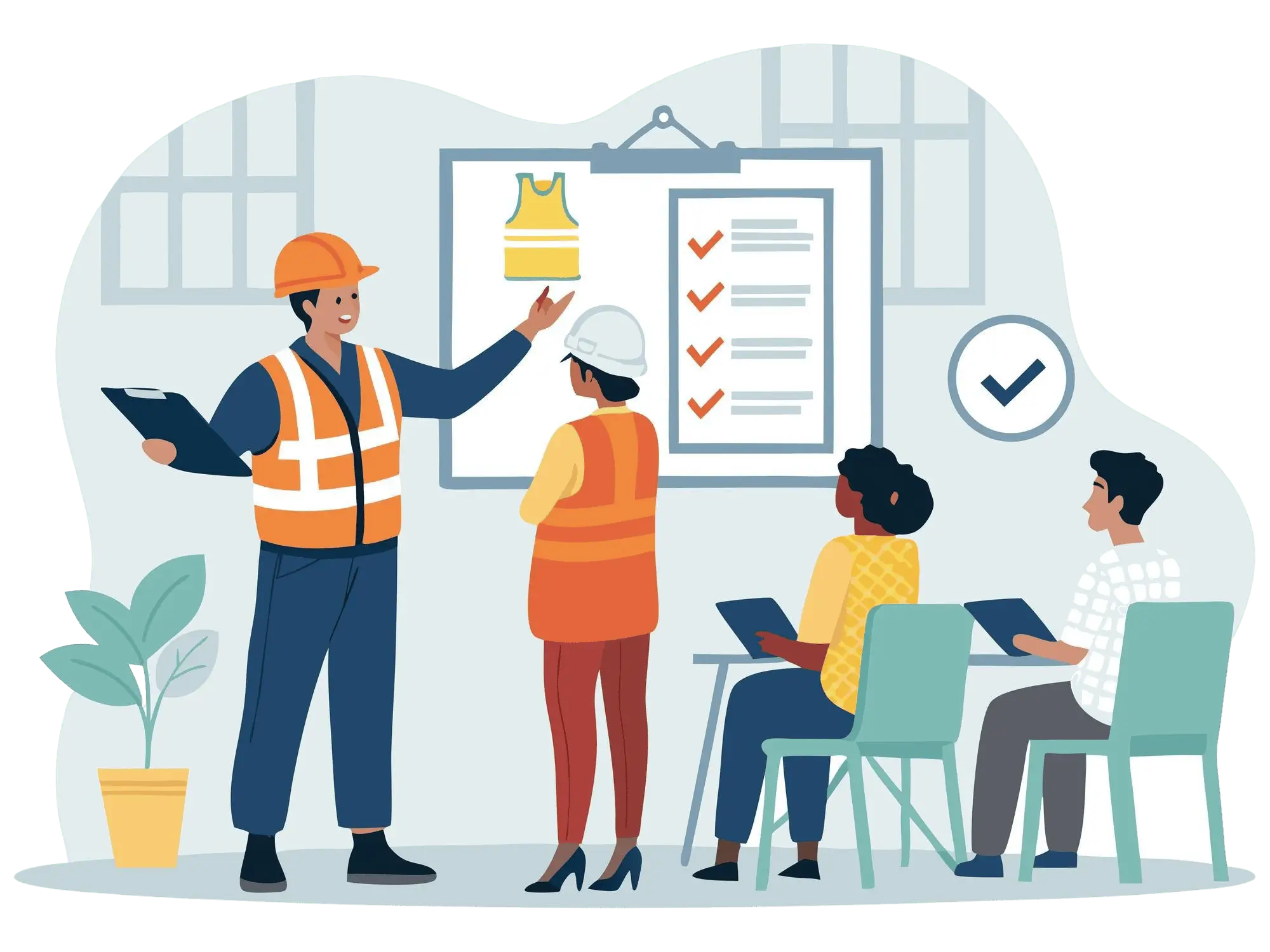
Why Safety Training is Essential in Iraq
Work-related accidents and injuries might have dire consequences on both the employees and the organization. Businesses operating in Iraq face unique challenges, including high-risk industries, evolving regulations, and operational hazards. Professional Safety Training in Iraq ensures that employees are aware of potential risks, know how to respond effectively, and follow best practices for safety.
Key benefits of safety training include:
- Prevention of workplace accidents and injuries
- Enhanced employee awareness of hazards and safety protocols
- Compliance with Iraq’s safety regulations and international standards
- Improved operational efficiency and reduced downtime
- Increased employee confidence and organisational credibility
By investing in safety training, organisations demonstrate a commitment to employee welfare, operational excellence, and long-term sustainability. Employees gain confidence and learn to take proactive measures, creating a safer and more productive workplace.
Our Approach to Safety Training in Iraq
At Maqlink International, our Safety Training in Iraq follows a structured and practical approach that combines industry knowledge, regulatory compliance, and hands-on learning. Participants are not only trained to understand safety principles but also to apply them in their daily operations.
Our approach includes:
- Assessing safety needs and training gaps
- Designing customised modules by role and industry
- Delivering interactive workshops and scenario-based exercises
- Providing post-training evaluation and ongoing support
This methodology ensures that safety training is actionable and directly applicable, enabling organisations to maintain high standards of workplace safety and compliance.
Core Components of Safety Training in Iraq
Hazard Identification and Risk Assessment
Understanding potential workplace hazards is critical. Participants learn to identify risks, evaluate their impact, and implement preventive measures. Safety Training in Iraq equips employees with the skills to conduct regular risk assessments, maintain safe work environments, and respond proactively to potential hazards.
Personal Protective Equipment (PPE) and Safety Gear
It is essential to properly use PPE to avoid injury. Training covers selection, usage, maintenance, and compliance with PPE standards. Safety Training in Iraq ensures employees understand the importance of protective gear, reducing the likelihood of accidents and promoting a culture of personal responsibility.
Fire Safety and Emergency Response
Fire hazards are a common workplace risk. Participants learn fire prevention strategies, emergency evacuation procedures, and the use of fire safety equipment. Safety Training in Iraq prepares employees to respond effectively to emergencies, minimising damage, protecting lives, and ensuring business continuity.
Workplace Ergonomics and Health Safety
Ergonomics and occupational health are vital for employee well-being. Training includes safe lifting techniques, workstation setup, and measures to prevent musculoskeletal injuries. Safety Training in Iraq helps organisations reduce long-term health risks, improve employee comfort, and maintain productivity.
Regulatory Compliance and Safety Standards
Compliance with local safety laws and international standards is critical. Training covers Iraq’s occupational health and safety regulations, reporting requirements, and documentation. Safety Training in Iraq ensures employees and management understand legal obligations, reducing liability and fostering a culture of safety compliance.
Incident Reporting and Investigation
Effective incident reporting and investigation help prevent future accidents. Participants learn how to document incidents, conduct root-cause analysis, and implement corrective measures. Safety Training in Iraq equips employees with the skills to maintain a proactive safety culture, ensuring continuous improvement in workplace safety practices.
Training Methodology
Needs Assessment and Customisation
Every organisation faces unique safety challenges. Safety Training in Iraq begins with an assessment of workplace hazards, operational processes, and employee roles. Training modules are customised to address these specific needs, ensuring relevance, engagement, and practical application.
Interactive Workshops and Practical Exercises
Hands-on learning is central to our safety training. Participants engage in workshops, simulations, role-playing, and practical exercises to apply safety concepts in real-world scenarios. Safety Training in Iraq ensures employees internalise knowledge and develop confidence to implement safety measures effectively.
Monitoring, Evaluation, and Continuous Support
Post-training assessments, follow-ups, and coaching reinforce skills and ensure knowledge retention. Safety Training in Iraq provides organisations with measurable improvements in workplace safety, operational compliance, and employee awareness. Continuous support fosters a proactive and sustainable safety culture.
Industries Benefiting from Safety Training in Iraq
Our programmes support organisations across multiple sectors, helping teams enhance workplace safety, reduce risks, and ensure regulatory compliance.
- Construction and engineering companies : Worksites involve high-risk activities, heavy machinery, and potential hazards. Training equips employees with safety protocols, hazard identification skills, and emergency response techniques to prevent accidents.
- Oil and gas and energy sectors : These industries operate in high-risk environments with strict safety requirements. Training focuses on handling hazardous materials, managing operational risks, and complying with industry regulations.
- Manufacturing and industrial operations : Complex machinery and industrial processes create potential safety risks. Training improves operational safety, reduces accidents, and ensures adherence to compliance standards.
- Healthcare and laboratory environments : Staff face biological, chemical, and ergonomic risks daily. Training covers infection control, safe handling of materials, and emergency response practices to protect employees and patients.
- Corporate offices and administrative organisations : Even office environments require awareness of safety and emergency procedures. Training focuses on ergonomics, fire safety, and creating a culture of safety across teams.
Training is customised to industry-specific hazards, workforce roles, and regulatory requirements, ensuring employees gain practical, applicable, and effective safety skills.
Why Choose Maqlink International for Safety Training in Iraq
Organisations trust Maqlink International for professional, practical, and results-driven safety training. Our Safety Training in Iraq programmes are designed to equip employees with the knowledge and skills needed to work safely, reduce risks, and enhance operational performance.
We offer customised modules tailored to workforce roles, industry-specific hazards, and organisational objectives, ensuring training is relevant and impactful. Participants benefit from interactive workshops, practical demonstrations, and scenario-based learning that encourage hands-on application of safety principles.
Training is delivered by experienced professionals with extensive expertise in local and international safety standards. A strong emphasis is placed on measurable outcomes, compliance, and operational efficiency, helping organisations achieve tangible improvements.
To ensure long-term impact, we provide post-training support that reinforces best practices and promotes continuous improvement. Our goal is to help organisations develop a skilled, aware, and accountable workforce that fosters safety, compliance, and operational excellence.
Long-Term Benefits of Safety Training in Iraq
Investing in safety training provides lasting advantages:
- Reduced workplace accidents and improved employee safety
- Compliance with local and international safety regulations
- Increased operational efficiency and reduced downtime
- Improved employee morale, confidence, and engagement
- Strengthened organisational reputation and risk management
Safety Training in Iraq equips organisations with the knowledge, skills, and culture needed to maintain high safety standards, prevent accidents, and foster a proactive approach to workplace protection.
Partner with Maqlink International for Safety Training in Iraq
At Maqlink International, we understand that safety is the foundation of operational success. Our Safety Training in Iraq empowers employees, strengthens compliance, and enhances workplace safety culture. By investing in structured training, organisations can reduce risks, improve productivity, and maintain a safe, healthy, and compliant working environment.
Frequently asked questions
Safety Training in Iraq equips employees and managers with the knowledge and skills to prevent workplace accidents, comply with regulations, and foster a proactive safety culture. It reduces risks, protects employees, improves productivity, and ensures businesses maintain high operational and legal safety standards across all departments.
Safety Training in Iraq is designed for all employees, including frontline staff, supervisors, and managers. Participants learn to identify hazards, implement preventive measures, and respond effectively to emergencies. This training ensures that teams at all levels understand safety protocols and can maintain a safe working environment consistently.
The duration of safety training varies depending on the programme’s scope. Basic workshops may last a few hours, while comprehensive training covering hazard assessment, emergency procedures, PPE use, and compliance can extend over several days to ensure thorough knowledge and practical application.
Safety Training in Iraq covers hazard identification, risk assessment, fire safety, emergency response, PPE usage, ergonomics, and compliance with local and international standards. Employees gain both theoretical knowledge and practical skills to manage risks, prevent accidents, and create a safe, compliant, and productive workplace.
Yes. Safety training is fully scalable and can be customised for small and medium-sized businesses. Employees learn practical techniques for identifying hazards, using PPE correctly, and maintaining compliance. Even smaller organisations benefit from safer operations, reduced accident risks, and a structured approach to workplace safety that aligns with legal requirements.
Through Safety Training in Iraq, employees learn to recognise hazards, follow safety procedures, and respond to emergencies effectively. Training provides practical skills and knowledge that reduce the likelihood of accidents. Organisations benefit from improved workplace safety, higher employee confidence, and a culture that proactively prevents operational incidents.
Absolutely. Safety Training in Iraq educates employees and management on local occupational safety regulations and international standards. Participants learn how to implement policies, document procedures, and report incidents. By following these guidelines, organisations ensure compliance, minimise legal risks, and maintain a safe workplace for employees across all departments.
Safety training is delivered through interactive workshops, scenario-based exercises, role-playing, and practical demonstrations. Employees engage in real-world examples and simulations to internalise key safety principles. Continuous assessments and post-training support reinforce knowledge, ensuring staff can confidently apply their training in daily operations to maintain workplace safety.
Industries such as construction, oil and gas, manufacturing, healthcare, and corporate offices gain significant benefits from Safety Training in Iraq. Programmes are tailored to address sector-specific hazards and operational challenges, equipping employees with the skills needed to maintain safety, comply with regulations, and improve workplace efficiency.
Effectiveness is measured through reduced workplace accidents, incident reporting, audits, and employee feedback. Employees apply learned skills to maintain safety standards, demonstrating awareness and proactive behaviour. Safety training helps organisations track measurable improvements, including operational compliance, risk reduction, and the creation of a safer, more productive work environment.
Yes. Safety training can be tailored to an organisation’s industry, operational risks, and workforce roles. Customised training ensures employees receive relevant and practical knowledge that can be applied immediately. This approach increases engagement, retention, and workplace safety effectiveness, helping organisations meet compliance standards and minimise risks efficiently.
Long-term benefits include fewer workplace accidents, improved employee safety, regulatory compliance, and the development of a proactive safety culture. Organisations experience higher productivity, reduced operational risks, and enhanced reputation. Safety Training in Iraq ensures sustainable safety improvements, helping businesses protect employees and maintain efficient, risk-free operations.